
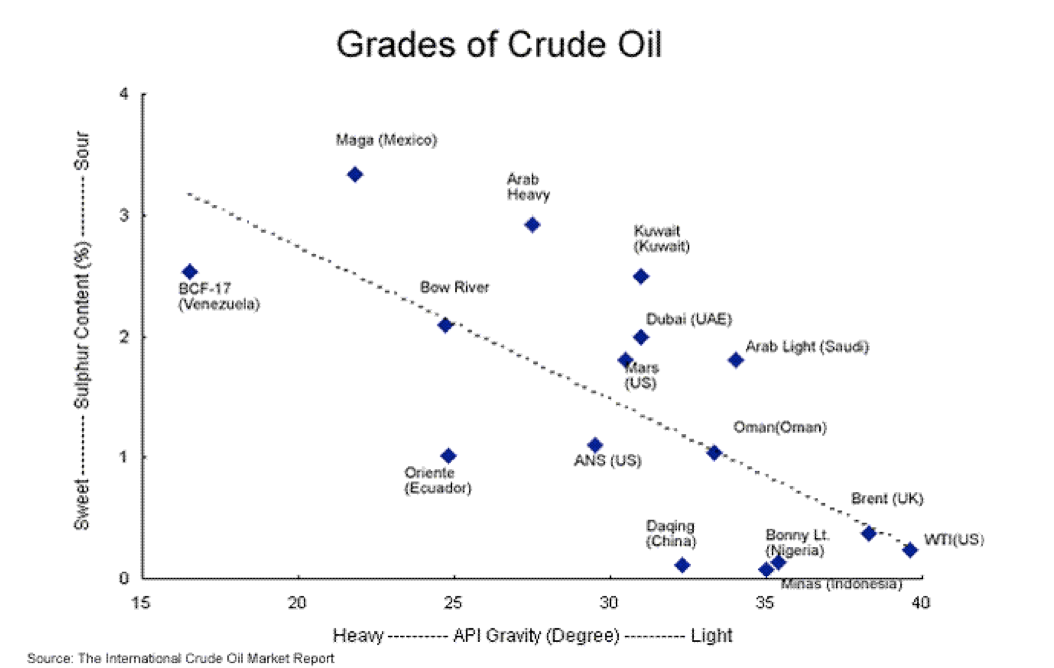
Light, sweet crudes have a higher proportion of the light molecules used to make premium fuels like gasoline, naphtha, and – to some extent – diesel. Heavy crudes have a higher proportion of molecules that can only be used to make diesel fuel or residual fuels oils that are sold at a discount to ships or power producers. Heavy crudes are also more difficult to refine, requiring intensive processing using catalytic cracking and coking units.
Ready for your soy, half-caff, no whip, caramel macchiato yet?
Doing the Refinery Three-Step
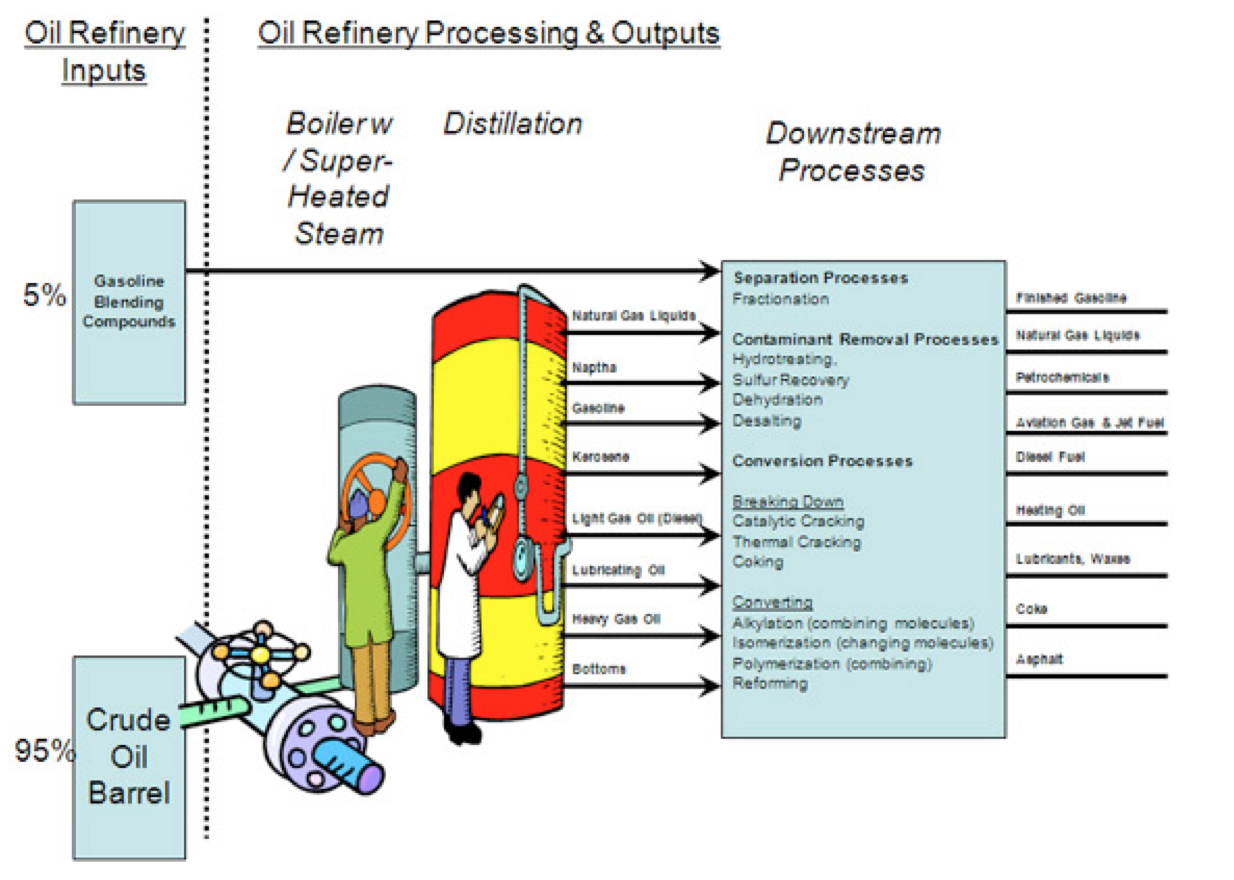
As you can see from the illustration below, different types of crude oil yield a different mix of products. The economic viability of a refinery depends on the crude it can obtain and process (called crude slates), the complexity of the refining equipment (refinery configuration), and the type and quality of products produced (product slate) to meet market demand.
 [image source]
So, how does a refinery turn a barrel of crude into the useful products we rely on? It generally takes three basic steps.
