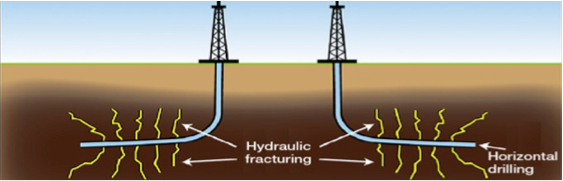
But what is fracking – or fracing – exactly? Journalist Russell Gold has defined fracking as “the violent act of cracking open rocks.” That’s a fairly accurate description: Fracking involves “blasting” millions of gallons of water, sand, and a unique brew of chemicals – anything from coffee grounds to acids and gels – to break…
But what is fracking – or fracing – exactly? Journalist Russell Gold has defined fracking as “the violent act of cracking open rocks.” That’s a fairly accurate description: Fracking involves “blasting” millions of gallons of water, sand, and a unique brew of chemicals – anything from coffee grounds to acids and gels – to break apart dense, “tight” shale formations to get at the oil and gas trapped deep inside.
An Ideal Pairing
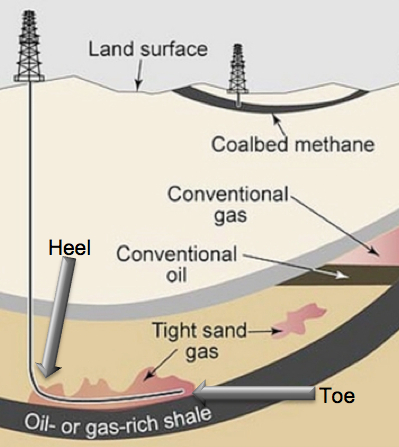
Geologist Dan Steward was a notable member of the Mitchell Energy team that pioneered fracking and revolutionized the shale gas industry, beginning with the Barnett play in Texas. He sat down with us to explain the process and the equipment behind the technique in layman’s terms: “The ‘toe’ is the very end of the lateral, and the ‘heel’ is back at the area where you’re making the turn for your lateral. You always start fracking at the toe. You drill down vertically, then start turning your wellbore to get it horizontal. Then once you get it horizontal, you drill in formation out to some terminus (a toe). We put these huge induced fractures into the shale. After we frack it, we start producing the frack fluid off and leave all that pressure down in that frack so that it’s now substantially lower than the pressure in the shale. When you produce the induced fracture, you initially are producing back to your frack fluids. When you eventually get most of that back out into your fracture, that creates a pressure sink within the fracture. The shale recognizes that and tries to equalize.”