
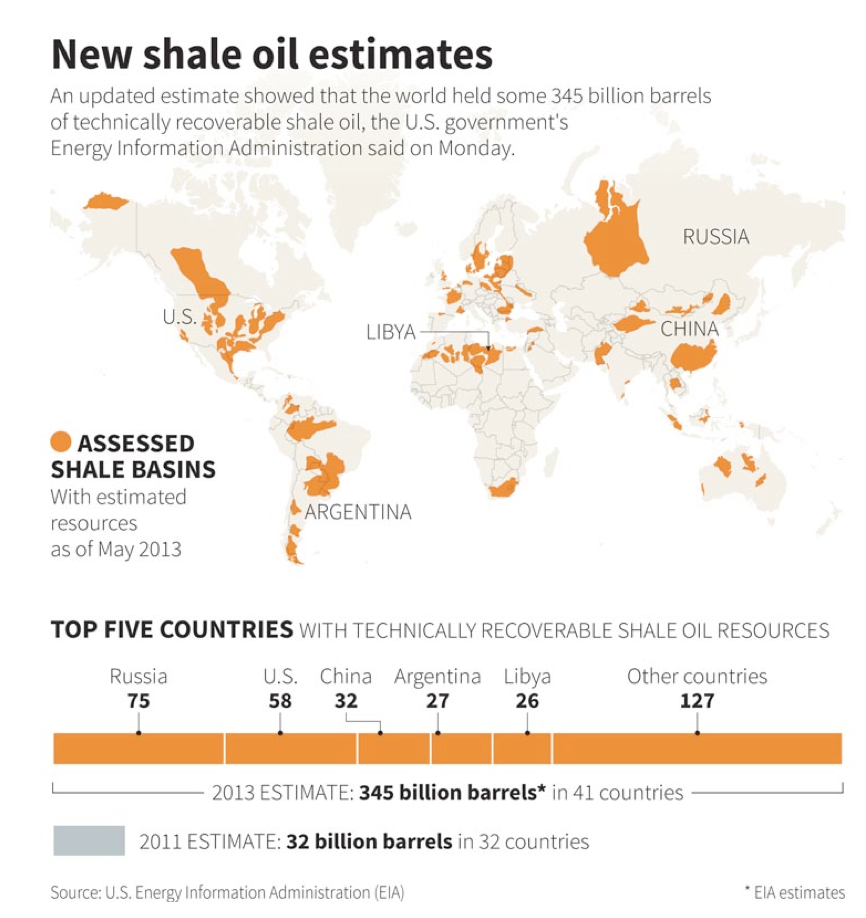
Fracking is required to wrest oil shale from its rocky deposits, and Israeli fracking production is still tiny and more expensive than, say, drilling in Saudi Arabia or Kuwait. But as fracking technology continues to advance, and Israel opens up both its oil shale oil and some 16 trillion cubic feet of offshore natural-gas deposits, not only could the country achieve energy independence, it might become a major oil and gas exporter.
That changing role will undoubtedly affect Israel’s relationships with Western Europe, which could use more energy resources. The offshore reserves have already more than piqued the attention of Russia’s Vladimir Putin: He encouraged a partnership between Israel and Russian energy giant Gazprom to open up those fields.
